
ORGANISATION AND HISTORY
SusCon, ISA and the people behind the events
Dallas, Oslo, early International Suspension Alliance meetings and the educators who shaped collaboration: people, dates and sources.
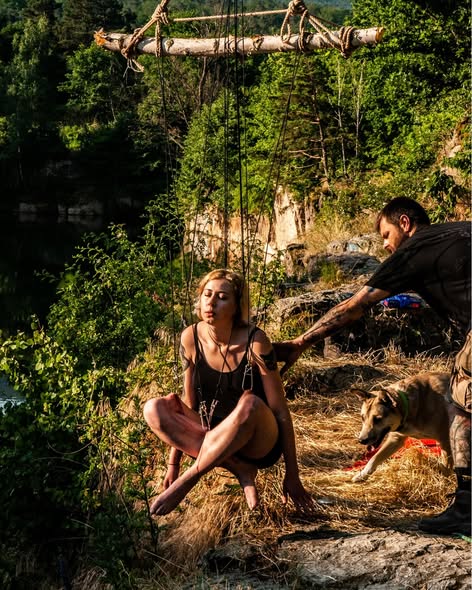
The scene extends beyond the stage
Body suspension history includes photographed acts and less visible meetings, publications and relationships. “Community” becomes more precise when we identify who organised, taught, wrote and addressed shared problems. Teams need not have had identical aims.
SusCon is used for a suspension convention. BME connects Texas SusCon with Allen Falkner and TSD from 2001: a date in gathering history, not a complete origin story for the practice. [BMETEXAS]
Different roles and skills
Paul King’s 2013 The Point account describes piercing and suspension as overlapping communities with distinct needs and experience, including team roles that do not involve piercing. A single professional title therefore cannot stand for every responsibility. [ISA13]
Performer, piercer, educator, producer and writer may be one person or several. Evidence for one role does not establish the others. Attending a convention likewise differs from teaching there.
Three meetings in 2013
King records a Dallas meeting on 28 March 2013, an open forum at the APP conference on 12 June, and a further Oslo meeting on 24 July. The June forum had 86 attendees and received a working mission statement for the proposed International Suspension Alliance. [ISA13]
These dates describe a historical organising process. They do not verify current membership, certification, board composition or law. Distinguish the initial proposal, working group and later activities rather than collapsing them into one label.
Misty Forsberg: writing and education
Efix Roy’s profile in The Point in 2020 recalls Misty Forsberg’s Suspension.org writing, work with Dallas SusCon and teaching. It records the 2012 A. “Spliff” Rosa award and participation in founding ISA and its first board. These are historical biographical points, not a present service listing. [MISTY20]
Such contributions broaden an archive beyond striking images. A publication, a contact network or a prepared meeting can have lasting influence. Look for editorial and organisational credits alongside performers’ names.
Art, education and facilitation
Wings of Desire, founded in Oslo in 2002 by Håvve Fjell as a branch of Pain Solution, distinguishes artistic collaborations from education and facilitation in its self-description. This is one team’s stated approach rather than a definition of all conventions. [WOD]
Ask which kind of invitation you are reading. Spectators, prospective participants and visiting teams need different information about an event. Identifying its format helps form appropriate programme questions.
What can a team meeting teach?
Understanding participant contact, support, space and distinct responsibilities matters alongside watching an act. King distinguishes overlapping but separate communities and non-piercing roles. [ISA13] WoD’s history also describes ongoing teamwork beyond annual conventions; clarify what a learning programme actually covers. [WODH]
Key point: Collaboration includes education, publishing and organisational work alongside performance.
Sources and further reading
- Point #65: International Suspension Alliance (ISA) — Paul King / The Point, Association of Professional Piercers. 2013. Report on the initiative’s beginnings in 2013; not verification of ISA’s present status.
- Point 82: Misty Forsberg — Efix Roy / The Point, Association of Professional Piercers. 2020. Profile of an author and educator; the byline in the text differs from the publishing account.
- About Wings of Desire — Wings of Desire. The Oslo team’s official self-description.
- Texas SusCon — BME Encyclopedia. Community record of the convention from 2001.
- History — Wings of Desire / Håvve Fjell. The team’s retrospective history.